
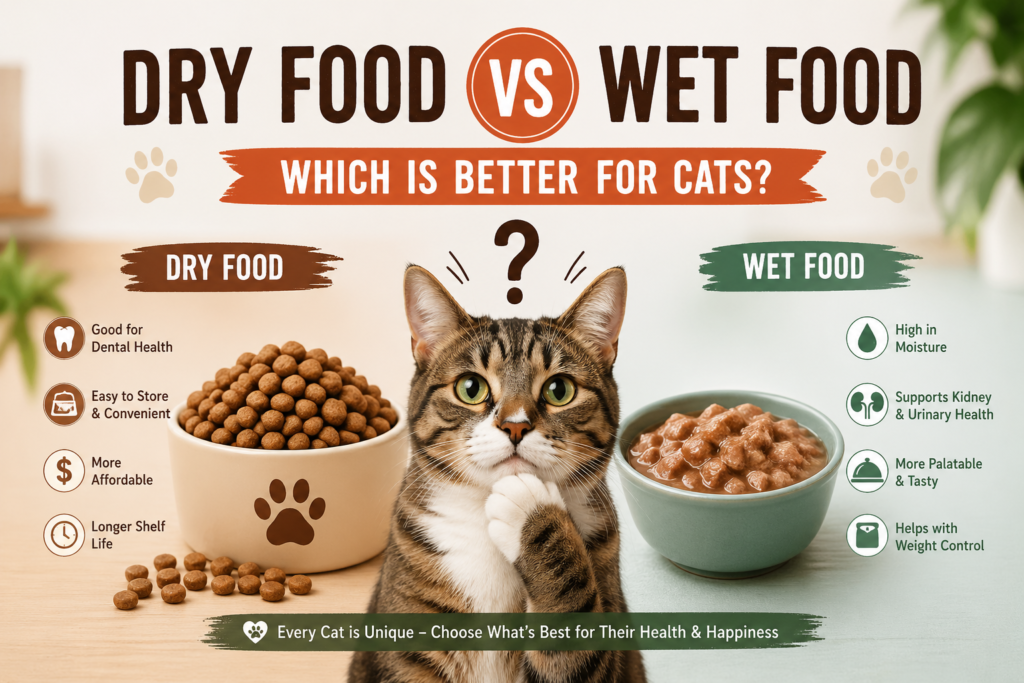
Choosing the right diet for your cat is one of the most important decisions for their long term health. Many cat owners often get confused between dry food and wet food. Both have their own advantages and disadvantages, and the best choice usually depends on your cat’s age, health condition and lifestyle.
Below is a complete guide to help you understand both options clearly so you can decide what is best for your feline friend.
1. What is Dry Cat Food?
Dry cat food, also known as kibble, is a type of food that contains very low moisture (usually around 10%). It is made by processing ingredients like meat, grains and vitamins into small crunchy pieces.
Dry food is popular because it is easy to store, affordable and convenient for busy pet owners. It does not spoil quickly and can be left in a bowl for longer periods without getting bad.
However, since it contains less moisture, cats need to drink more water when eating dry food regularly.
2. What is Wet Cat Food?
Wet cat food comes in cans, pouches or trays and contains a high amount of moisture (around 70–80%). It usually has a soft texture and stronger aroma, which makes it very appealing to cats.
Wet food closely resembles a cat’s natural diet in the wild because it is rich in protein and hydration. It is especially helpful for cats that do not drink enough water.
The downside is that wet food is more expensive and spoils quickly once opened.
3. Nutritional Differences Between Dry and Wet Food
Both dry and wet foods can be nutritionally complete if they are high quality. However, there are some key differences:
Dry food usually contains more carbohydrates and is calorie dense, which can be useful for active cats. Wet food, on the other hand, is higher in protein and moisture, making it more suitable for hydration and weight control.
If your cat has kidney issues or urinary problems, wet food is often recommended by veterinarians because of its high water content.
4. Health Benefits of Dry Food
Dry food has some clear advantages when used properly:
It helps in maintaining dental health by reducing plaque buildup as cats chew the crunchy kibble. It is also very convenient for portion control and long term feeding.
For multi cat households or free feeding systems, dry food is easier to manage and less messy.
5. Health Benefits of Wet Food
Wet food provides excellent hydration, which is very important for cats because they naturally have a low thirst drive. It supports kidney health and helps prevent urinary tract issues.
It is also more palatable, making it ideal for picky eaters or senior cats who may lose appetite.
Additionally, wet food can help with weight management because it is lower in carbohydrates and keeps cats feeling full longer.
6. Which One is Better for Your Cat?
There is no single answer to this question. The best option depends on your cat’s individual needs.
If your cat is healthy, active and drinks enough water, dry food alone can be sufficient. If your cat has health issues, is older or does not drink much water, wet food is usually a better choice.
Many veterinarians recommend a mixed diet (both dry and wet food) to get the benefits of both types.
7. Final Thoughts
Both dry and wet cat food have their own strengths and weaknesses. Instead of choosing one strictly, the best approach is to focus on balance and quality. Always choose high quality pet food, ensure fresh water is available and consider your cat’s health condition before deciding.
A well planned diet will keep your cat healthy, active and happy for years to come.