
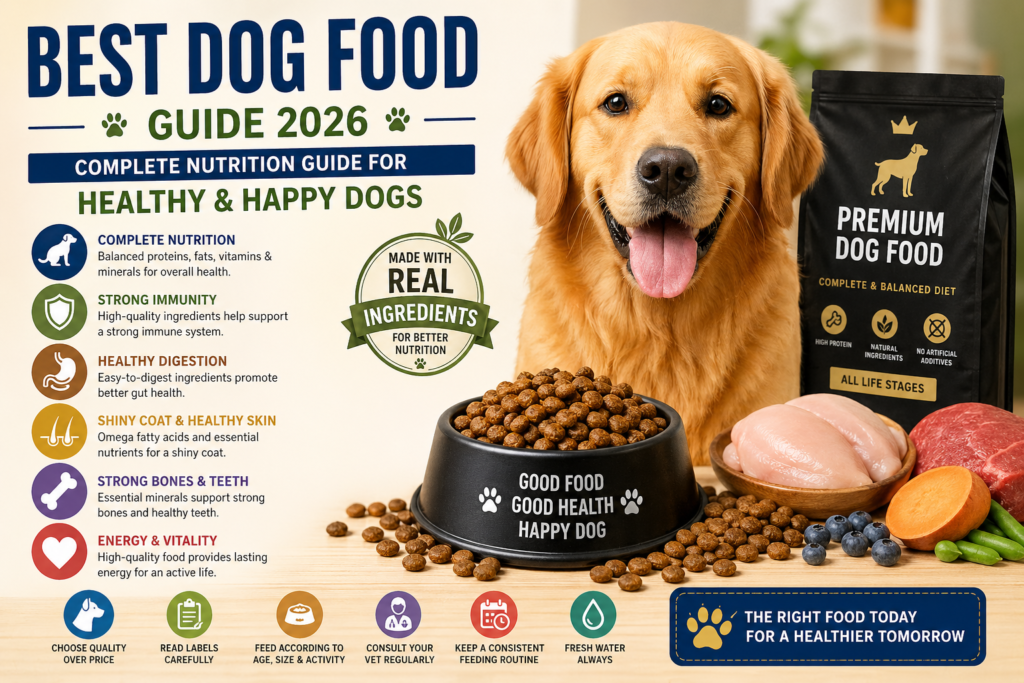
Understanding the Importance of Quality Dog Food
Good quality dog food is the foundation of a healthy, active, and long life for your pet. Dogs need a balanced diet that includes proteins, fats, vitamins, and minerals to maintain their energy levels, immunity, and overall well-being. Poor-quality food can lead to health issues like obesity, allergies, and digestive problems. That’s why choosing the right dog food is not just a preference—it’s a responsibility of every pet owner.
Types of Dog Food Available in the Market
Dog food generally comes in several forms such as dry food, wet food, semi-moist food, and raw food diets. Dry food (kibble) is the most popular because it is affordable and helps maintain dental health. Wet food is more flavorful and contains higher moisture content, making it suitable for picky eaters. Each type has its own benefits, and the choice depends on your dog’s age, health condition, and taste preferences.
Nutritional Requirements for Dogs
A balanced dog diet should include protein (chicken, beef, fish), healthy fats, carbohydrates, fiber, vitamins, and minerals. Protein helps in muscle development, fats provide energy, and vitamins support immunity. Puppies need more protein and calories, while adult dogs require balanced maintenance nutrition. Senior dogs may need food that supports joint health and digestion. Always check the ingredient label before purchasing dog food.
Dog Food According to Age Groups
Different life stages of dogs require different nutrition plans. Puppies need high-protein and high-calorie food to support rapid growth. Adult dogs require balanced food to maintain their health and energy. Senior dogs benefit from low-calorie and joint-supporting formulas. Feeding the right type of food according to age ensures your dog stays healthy at every stage of life.
Common Ingredients to Look For and Avoid
Healthy dog food should include real meat, whole grains, vegetables, and natural fats. However, you should avoid foods that contain artificial preservatives, excessive fillers like corn or soy, and harmful additives. Some low-quality foods may also include by-products that do not provide proper nutrition. Always choose trusted brands with transparent ingredient lists.
Benefits of High-Quality Dog Food
Feeding premium-quality dog food improves your dog’s coat, digestion, energy levels, and immunity. It reduces the risk of diseases and helps maintain a healthy weight. Good food also improves behavior and activity levels, making your dog more playful and active. In the long run, quality food reduces veterinary costs by preventing health issues.
Tips for Choosing the Right Dog Food
Always consider your dog’s breed, age, size, and health condition before selecting food. Read labels carefully and avoid products with unknown ingredients. Introduce new food gradually to avoid digestive issues. If your dog has allergies or medical conditions, consult a veterinarian before changing its diet. Proper selection ensures long-term health and happiness.
Conclusion
Choosing the right dog food is one of the most important decisions for any pet owner. A balanced and nutritious diet not only keeps your dog healthy but also improves its quality of life. By understanding ingredients, food types, and nutritional needs, you can make the best choice for your furry friend and ensure a long, happy life together.