
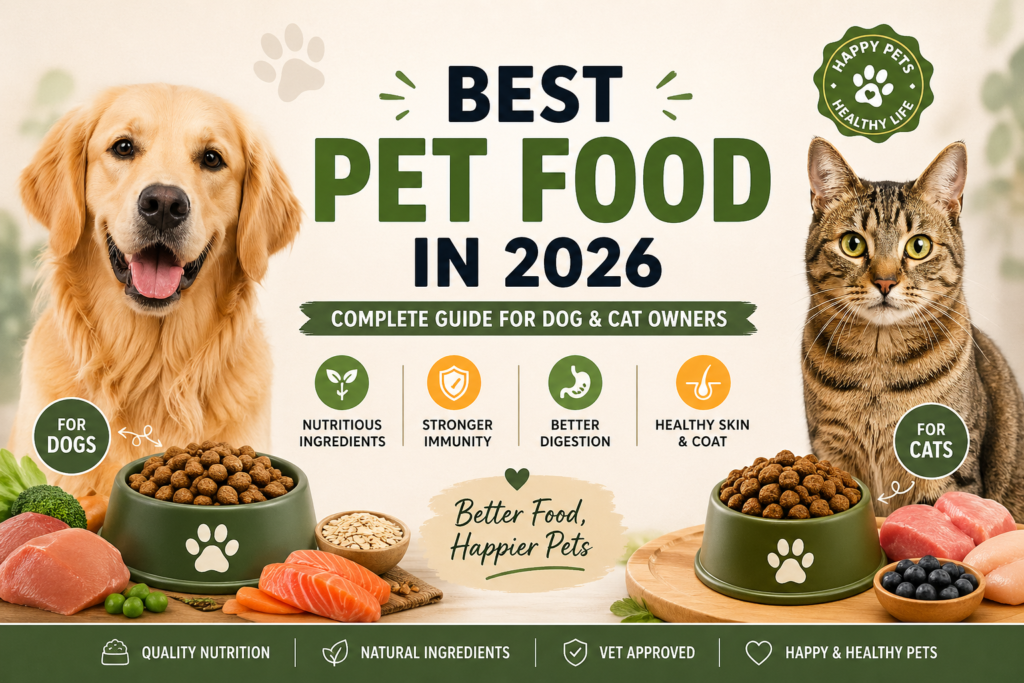
Choosing the best pet food in 2026 is more important than ever. With so many brands, ingredients, and diet trends available, pet owners often feel confused about what’s truly healthy. Whether you have a playful puppy, an adult dog, or a senior cat, proper nutrition is the foundation of a long and happy life.
This complete guide will help you understand everything about pet food—from ingredients to types—so you can make the best choice for your furry friend.
Why Choosing the Right Pet Food Matters
Your pet’s food directly impacts their overall health, energy levels, and lifespan. Poor-quality food can lead to issues like obesity, allergies, digestive problems, and even serious diseases.
High-quality pet food:
- Supports strong immunity
- Improves coat and skin health
- Helps maintain ideal weight
- Boosts energy and activity levels
Feeding your pet the right food is not just a choice—it’s a responsibility.
Understanding Pet Food Ingredients
Before buying any pet food, always check the ingredient list. The first few ingredients are the most important because they make up the majority of the food.
✅ Good Ingredients to Look For:
- Real meat (chicken, beef, fish)
- Whole grains (brown rice, oats)
- Vegetables (carrots, peas, sweet potatoes)
- Healthy fats (fish oil, chicken fat)
❌ Ingredients to Avoid:
- Artificial preservatives
- Meat by-products (low-quality sources)
- Excess fillers like corn and soy
- Artificial colors and flavors
The simpler and more natural the ingredient list, the better it usually is.
Types of Dog Food
There are different types of dog food available, and each has its own benefits.
🦴 Dry Dog Food (Kibble)
Dry food is the most common option. It is affordable, convenient, and helps clean teeth by reducing plaque buildup.
🥫 Wet Dog Food
Wet food contains more moisture, making it easier to eat and digest. It is ideal for dogs who don’t drink enough water.
🥩 Raw Dog Food
Raw diets include uncooked meat, bones, and vegetables. While it’s a growing trend, it requires careful handling and proper balance.
🍲 Homemade Dog Food
Homemade food gives full control over ingredients, but it must be nutritionally balanced to avoid deficiencies.
Wet vs Dry Pet Food: Which Is Better?
Both wet and dry foods have advantages, and the best choice often depends on your pet’s needs.
Dry Food:
- More affordable
- Easy to store
- Helps dental health
Wet Food:
- Better hydration
- More palatable
- Easier to digest
👉 Many pet owners choose a mix of both for balanced nutrition.
Grain-Free vs Regular Pet Food
Grain-free pet food has become very popular, but it’s not always necessary.
- Grain-Free Food: Good for pets with allergies or sensitivities
- Regular Food: Provides fiber and energy for most pets
Always consult your pet’s specific needs instead of following trends blindly.
Affordable vs Premium Pet Food
Not all expensive pet food is automatically better, and not all cheap food is bad.
Premium Pet Food:
- Higher-quality ingredients
- Better nutrient balance
- Fewer fillers
Affordable Pet Food:
- Budget-friendly
- May still meet basic nutritional needs
👉 The key is to find the best value—not just the lowest price.
Special Diets for Different Needs
Every pet is unique, and sometimes they need specialized diets.
- Puppy/Kitten Food: High in protein and calories
- Senior Pet Food: Lower calories, joint support nutrients
- Weight Management Food: Reduced fat and calories
- Allergy-Friendly Food: Limited ingredients
Choosing the right formula based on age and health is essential.
How to Choose the Best Pet Food in 2026
Here’s a simple checklist to help you choose:
✔ Check ingredient quality
✔ Match food with your pet’s age and size
✔ Consider health conditions
✔ Read reviews and research brands
✔ Start with small quantities before switching
Always observe how your pet reacts to new food.